
Designing Climate Action: 6 Key Takeaways from CNU’s New Handbook for Urbanists
Written by AD&V®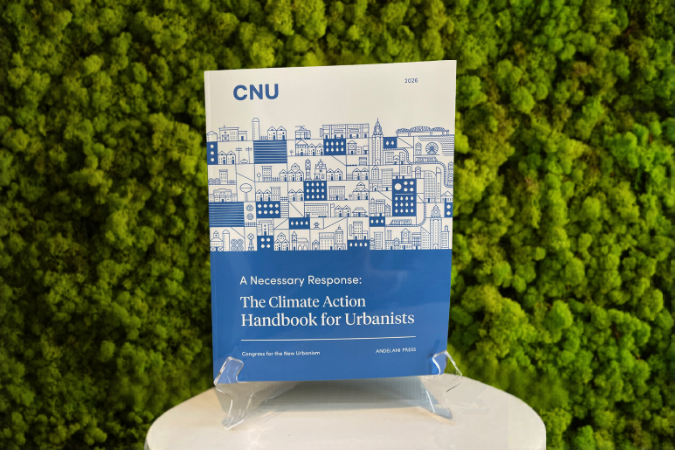
ABOUT THE AUTHOR | AD&V® is dedicated to advanced and energy-efficient sustainable architecture & interior design that enhances people’s experience of the world and improves their lives.
CLIMATE CHANGE IS NO LONGER A DISTANT SCENARIO, IT’S ALREADY SHAPING HOW COMMUNITIES LIVE, MOVE, AND RECOVER.
From extreme heat and flooding to displacement and rising infrastructure costs, the impacts are increasingly visible across cities and regions worldwide. Yet amid this urgency, one message is becoming clear: climate action is not only technological or policy-driven—it is spatial.
Where we build, how we connect neighborhoods, and what daily choices our environments make possible all play a decisive role in shaping climate outcomes. Urban planners and designers may not control every lever of climate policy, but they influence something just as powerful: the form and function of the places where life unfolds.
That premise sits at the heart of A Necessary Response: The Climate Action Handbook for Urbanists, newly published by the Congress for the New Urbanism (CNU). Featuring AD&V® Cofounder Ricardo Álvarez-Díaz as one of its authors and published by Andelani Press, our sister company, the handbook offers a clear, practical framework for addressing climate change through walkable, connected, community-centered urbanism.
At AD&V®, we believe this conversation is essential. Designing Places of Purpose® means understanding that resilience, equity, and sustainability are not add-ons—they are foundational. The CNU handbook reinforces that belief and provides a shared language for urbanists everywhere who are ready to move from intention to action.
WHY THIS HANDBOOK MATTERS
Urbanists operate within a limited but critical sphere of influence. While they may not dictate national climate policy or individual behavior, they shape land-use patterns, transportation systems, public spaces, and building forms that endure for generations. Those decisions influence emissions, health, affordability, and resilience long after a plan is approved.
The CNU handbook frames climate change as a “wicked problem”—complex, interconnected, and impossible to solve through a single discipline. This is precisely where urbanists add value. New Urbanism has long emphasized:
Future-oriented thinking
Multidisciplinary collaboration
Consensus-building among diverse stakeholders
Economic realism
Public health and safety as planning fundamentals
By situating climate action within these strengths, the handbook moves the conversation away from abstract goals and toward implementable, place-based solutions that can be adapted to local contexts. Below are six key takeaways that we find most relevant for designers, planners, and decision-makers today:
1. WALKABLE, CONNECTED URBAN DESIGN IS CLIMATE STRATEGY
The handbook makes a critical distinction: climate action cannot rely on technology alone. Without better community design, efficiency gains can be quickly offset by longer commutes, larger vehicles, and continued sprawl.
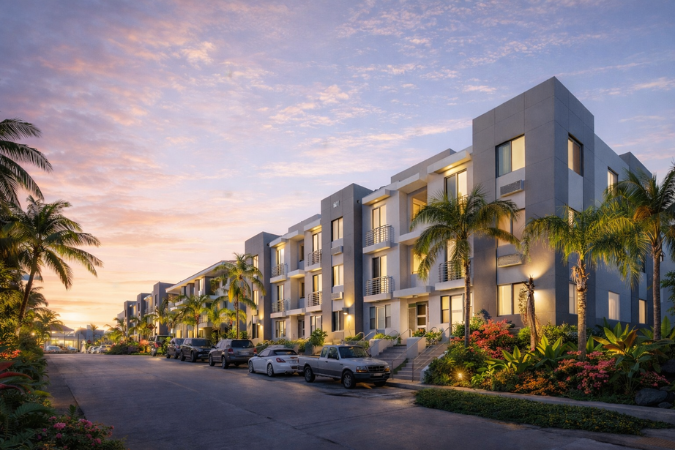
Walkable, connected neighborhoods reduce vehicle miles traveled, support transit, and make daily low-carbon choices more realistic. Just as important, they create healthier, more resilient communities in places where access, comfort, and social connection are built into everyday life.
Density, connectivity, and proximity are not abstract planning concepts; they are climate tools. For designers, this reinforces the simple but powerful idea that every street, block, and neighborhood plan is a climate decision.
2. CLIMATE ACTION REQUIRES WORKING ACROSS DISCIPLINES
Climate challenges are too complex for any single discipline to solve. Transportation, buildings, energy, water, landscape, food systems, and emergency preparedness are deeply interconnected.
One of the handbook’s strongest arguments is that community planning is where these systems come together. Urbanists are uniquely positioned to convene engineers, architects, landscape designers, developers, and community members around a shared vision to ensure that solutions are integrated.
This collaborative model enables more resilient infrastructure solutions, holistic community outcomes, and better integration of energy, water, and mobility systems. Lasting climate solutions emerge when disciplines align around place-based outcomes.
3. PUBLIC INPUT IS CENTRAL, ESPECIALLY FOR MARGINALIZED COMMUNITIES
Climate change does not affect all communities equally. Historically marginalized populations often face the greatest risks while having the fewest resources to respond.
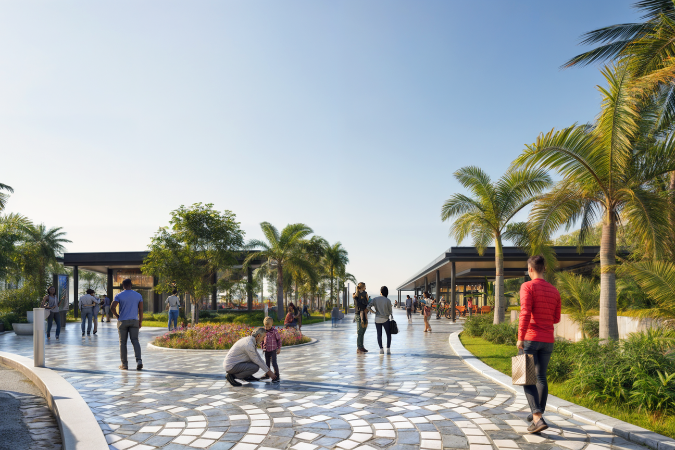
The handbook emphasizes listening-first engagement, highlighting tools such as charrettes and participatory planning processes that help communities navigate complex trade-offs. One guiding idea resonates strongly: “Help us where we are, not where you want us to be.”
This approach reframes climate action as a partnership—one that respects lived experience, builds trust, and leads to solutions communities can truly own.
4. CLIMATE RESPONSE REQUIRES MULTIPLE STRATEGIES
One of the most practical frameworks presented in the handbook is the idea that communities respond to climate in four ways:
Fortify & Defend: Using levees, seawalls, fire buffers, and strategic siting—most effective when paired with compact urbanism.
Accommodate: Designing for heat, flooding, and comfort through shade, albedo, stormwater dispersion, and passive cooling.
Retreat: Planning for climate migration and communities that can absorb growth without repeating sprawl.
Clean-Up: Managing areas that can no longer be defended or adapted.
Rather than a single solution, resilience requires a spectrum of approaches tailored to local conditions. For designers, this means flexibility, foresight, and long-term thinking must be embedded into every project.
5. PRACTICAL DESIGN ACTIONS CAN DRIVE IMPACT
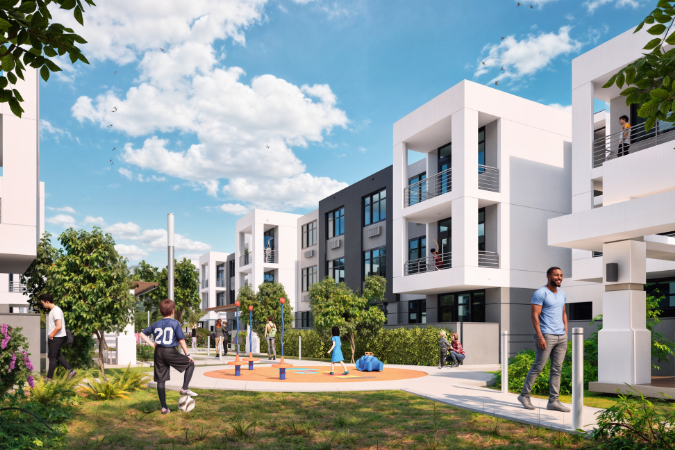
Beyond theory, the handbook outlines actionable strategies that can be implemented today, including:
Prioritizing infill and compact development.
Investing in alternative transportation.
Designing streets and public spaces for shade and thermal comfort.
Strengthening neighborhood-scale social networks and trust.
Designing for stormwater management and sea-level rise.
These are not abstract ideas; they are design decisions that can be applied immediately across projects of all scales.
6. THE FUTURE OF CITIES INCLUDES CLIMATE MIGRATION
As climate impacts intensify, migration will reshape cities. The handbook identifies different populations, from those planning ahead to those forced to relocate, and introduces the concept of “receiver communities” that welcome these new populations with dignity and resilience.
This highlights an important responsibility for urbanists not only to protect existing communities but to design future-ready places that can grow sustainably.
DESIGNING THE WAY FORWARD
The CNU Climate Action Handbook is not a checklist or a mandate, it’s an invitation. It calls on urbanists, designers, and planners to recognize both their agency and responsibility in shaping climate outcomes by creating environments that are not only sustainable but meaningful, resilient, and human-centered.
Climate action does not begin with grand declarations. It begins in neighborhoods, streets, buildings, and public spaces—each designed to support healthier, more resilient ways of living.
The handbook reminds us that New Urbanism is climate action, and that thoughtful, human-centered design remains one of our most powerful tools for navigating an uncertain future. Ultimately, the future of climate action will not be defined by policies or technologies alone, but by the places we choose to design.
FURTHER READING: DENSITY WITH DIGNITY: 9 REASONS TO RETHINK HOW WE PLAN HIGH-DENSITY COMMUNITIES