Executive Summary
Project Name: Jardines de La Milagrosa
Location: Río Piedras, San Juan, Puerto Rico
Project Type: Affordable Multifamily Housing | Historic Preservation | Community Revitalization | Urban Infill Development
Client: 107 Miracles, LLC / Valora Ventures
Housing Program: Approximately 100 Affordable Housing Units (mix of one- and two-bedroom units)
Site Area: Approximately 2.8 Cuerdas (11,066.82 SM)
Development Cost: Approximately $39 Million Construction Cost
AD&V® Role: Master Planning, Architecture, Historic Preservation, Adaptive Reuse, Affordable Housing Design, Entitlements & Permitting, Sustainability Integration, Community Development Strategy, and Construction Administration.
-
Jardines de La Milagrosa represents a transformative opportunity to address multiple priorities simultaneously: expanding affordable housing, preserving historically significant structures, and catalyzing the long-term revitalization of Río Piedras. Located on a strategically positioned urban site adjacent to the Río Piedras Market and major transportation corridors, the project seeks to create a vibrant mixed-use residential community while reinforcing the social, cultural, and economic resurgence of one of Puerto Rico's most important urban districts.
The development is centered around the adaptive reuse of the historic La Milagrosa Church and Convent, two culturally significant buildings that will be preserved and repurposed to support community uses, administrative functions, and residential opportunities. New residential construction complements these historic assets, creating a balanced development that respects the site's heritage while addressing contemporary housing needs.
More than an affordable housing project, Jardines de La Milagrosa serves as an urban regeneration strategy. By introducing new residents, activating underutilized properties, supporting community programs, and preserving local landmarks, the project strengthens neighborhood stability and contributes to the broader economic and social revitalization of Río Piedras.
-
Río Piedras has long served as an educational, commercial, and cultural center for Puerto Rico. However, decades of disinvestment, population decline, and underutilized properties have created challenges for the district's continued growth and vitality.
At the same time, Puerto Rico faces a significant shortage of quality affordable housing, particularly within urban areas that provide access to jobs, transportation, education, healthcare, and community services.
The La Milagrosa site presented a unique opportunity to:
Expand affordable housing opportunities
Preserve culturally significant historic structures
Revitalize underutilized urban property
Support neighborhood economic development
Strengthen community services and programming
Increase residential density within an established urban center
Rather than viewing these objectives separately, the project integrates them into a comprehensive redevelopment strategy designed to create long-term social and economic value.
-
The vision was to create more than an affordable housing development.
The project seeks to establish a community-centered neighborhood destination where housing, historic preservation, social services, and economic revitalization work together to strengthen Río Piedras.
Everyday Community Benefits
Affordable housing opportunities
Community gathering spaces
Historic preservation
Health and wellness programs
Community support services
Educational and cultural activities
Long-Term Community Benefits
Neighborhood revitalization
Preservation of cultural heritage
Economic development
Increased residential activity
Improved housing stability
Stronger community identity
The result is a project that supports both individual wellbeing and long-term urban regeneration.
-
AD&V® approached the project through the combined lenses of housing, preservation, placemaking, and community development.
Housing + Preservation + Community Revitalization Framework
Affordable Housing
Historic Preservation
Community Programming
Neighborhood Activation
Economic Revitalization
Long-Term Community Resilience
This integrated strategy recognizes that successful urban revitalization requires more than constructing buildings. It requires creating destinations that connect people to housing, services, culture, opportunity, and community life.
-
The project combines adaptive reuse, new residential construction, and community-focused amenities within a cohesive development framework.
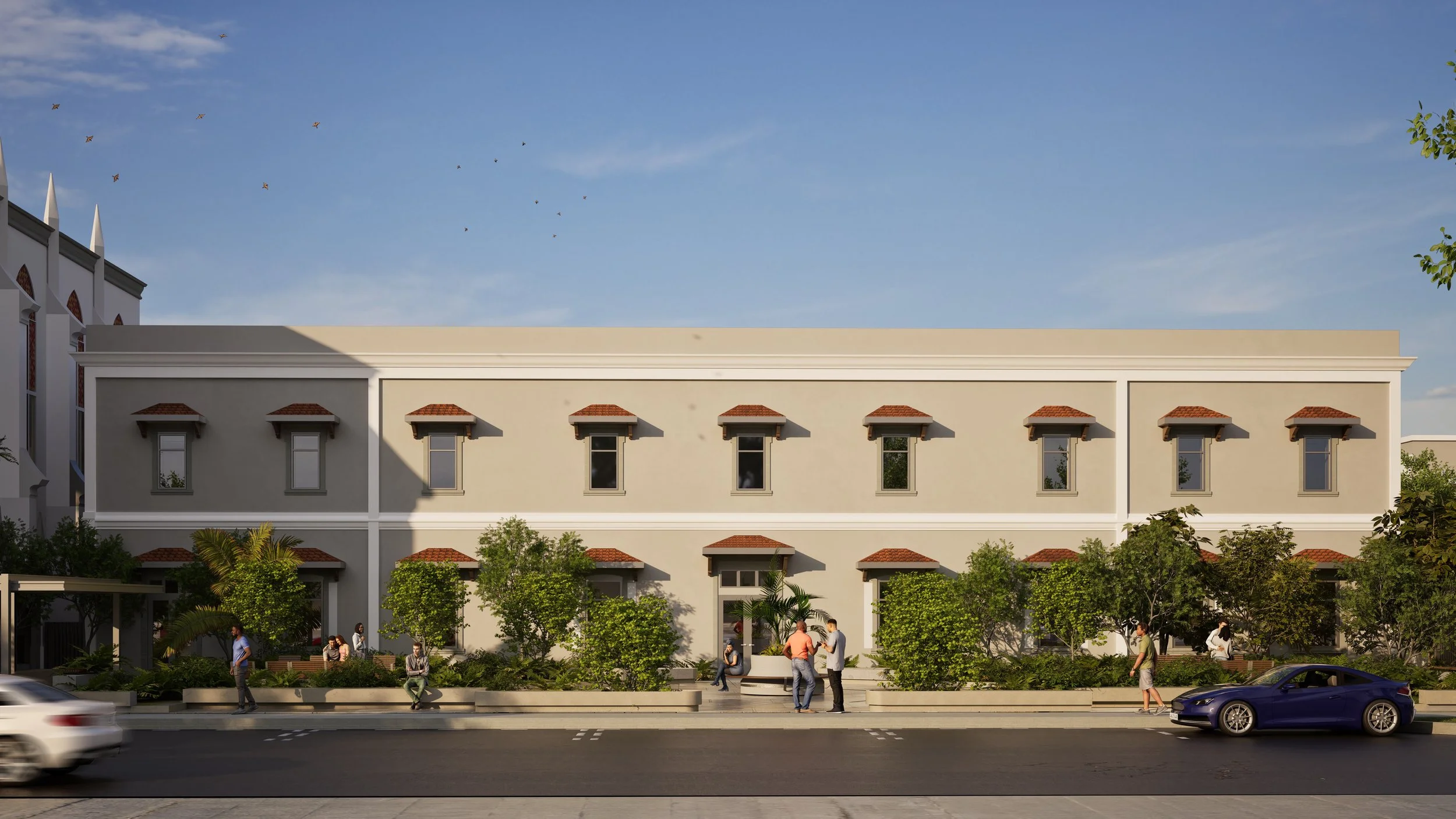
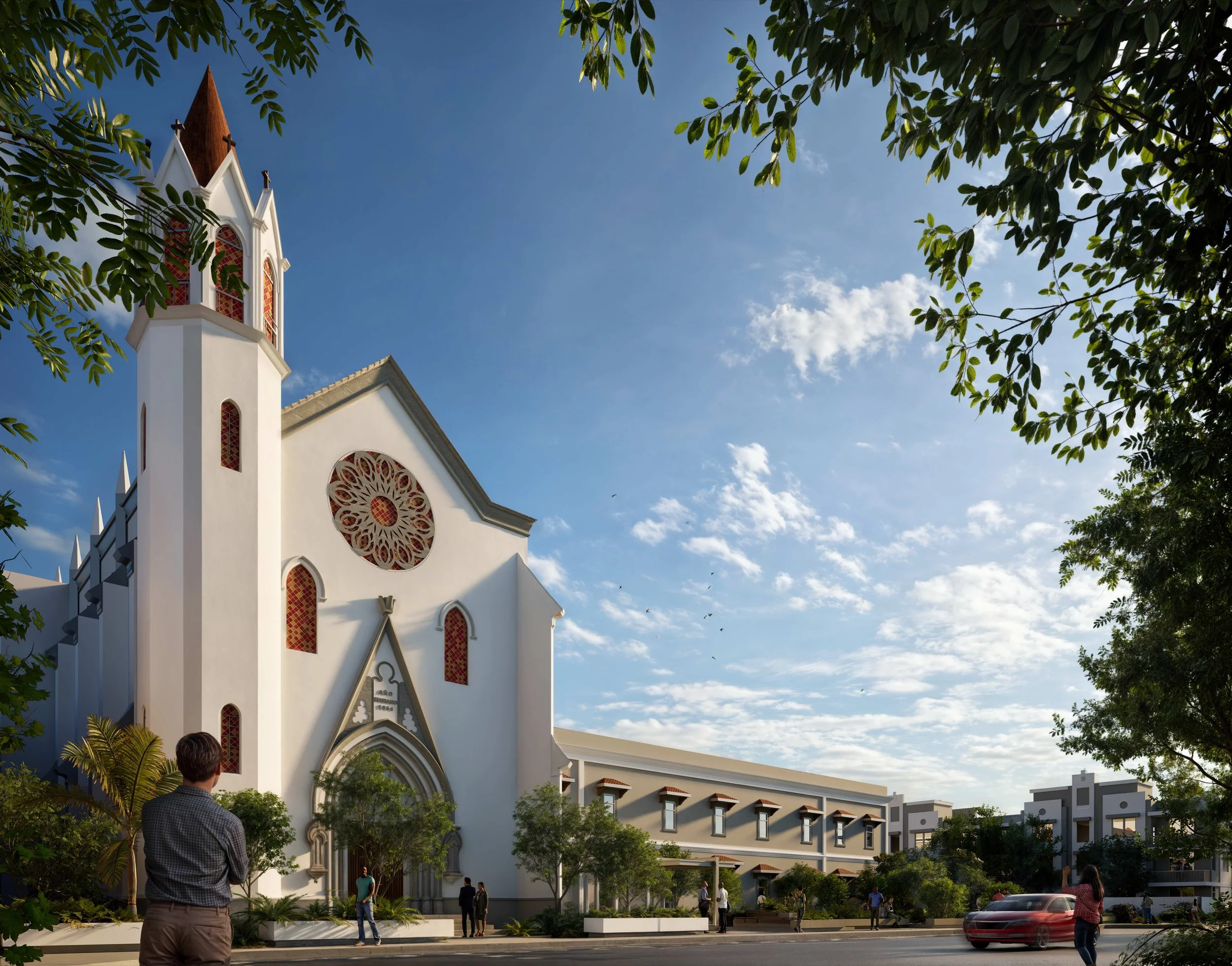
The historic La Milagrosa Church will be rehabilitated and transformed into a community-centered facility supporting neighborhood activities, cultural programming, community services, workshops, and public engagement. The former convent will be preserved and adapted to accommodate administrative functions, community-support spaces, and residential uses.
New three-story residential buildings introduce affordable housing opportunities while maintaining a scale compatible with the surrounding urban fabric. The development creates an active pedestrian environment through courtyards, gathering spaces, recreational amenities, and community programming that strengthen social interaction and neighborhood connectivity.
The project also integrates accessible units, resilient infrastructure, community facilities, fitness amenities, outdoor recreational areas, administrative spaces, and parking to support a comprehensive residential experience.
The result is a community-centered affordable housing development that balances preservation, housing production, and neighborhood revitalization within a single integrated vision.
-
The architecture of Jardines de La Milagrosa embraces the principles of adaptive reuse and New Urbanism by reinforcing the relationship between historic structures, residential development, and the public realm.
A central design objective was preserving the site's cultural identity while creating new opportunities for housing and community engagement. Rather than demolishing all existing structures, the project preserves key historic assets that continue to serve as important neighborhood landmarks. This approach allows the development to maintain a strong connection to the area's history while introducing new investment and activity.
From an urban design perspective, the project strengthens Río Piedras through increased residential density, activated open spaces, improved pedestrian connections, and expanded community amenities. The proximity to transportation, educational institutions, retail establishments, and community services supports a walkable and connected urban lifestyle.
The resulting development creates an environment where housing, culture, history, and community life reinforce one another, supporting the continued evolution of Río Piedras as a vibrant urban center.
-
Resilience and long-term performance are integrated throughout the development.
Key strategies include:
Adaptive reuse of historic structures
Energy Star appliances
Water Sense fixtures
Backup power generation
Water storage systems and cisterns
Durable, low-maintenance materials
Accessible and universal design principles
Sustainable site planning
Community-focused resilience infrastructure
These systems help reduce operating costs, improve environmental performance, and support continuity of operations during emergencies.
-
The greatest impact of Jardines de La Milagrosa extends beyond housing production.
The project creates affordable homes while preserving important cultural assets, expanding community resources, and supporting the long-term revitalization of Río Piedras. Residents will benefit from stable housing, access to services, recreational amenities, community programs, and stronger connections to neighborhood resources.
The development supports:
Affordable housing
Historic preservation
Community development
Economic revitalization
Social services
Cultural programming
Neighborhood activation
Long-term urban resilience
At the neighborhood scale, the project introduces new residential activity, supports local businesses, strengthens cultural identity, and increases investment within the Río Piedras urban core. By connecting preservation, housing, and economic development, Jardines de La Milagrosa demonstrates how strategic redevelopment can create broad and lasting community benefits.
-
Jardines de La Milagrosa demonstrates how affordable housing can serve as a catalyst for broader community transformation.
Rather than focusing solely on residential development, the project integrates historic preservation, community programming, placemaking, and urban revitalization within a single strategy. By preserving the historic church and convent while introducing new affordable housing, the project protects community heritage while expanding opportunities for current and future residents.
The project also reinforces the importance of urban reinvestment. Located in the heart of Río Piedras, it supports walkability, economic activity, cultural continuity, and neighborhood stability while creating a new model for community-centered redevelopment.
For AD&V®, Jardines de La Milagrosa showcases the firm's ability to integrate affordable housing, historic preservation, urban planning, resilience, and community development into a unified vision that generates meaningful long-term impact. It demonstrates that successful development is not simply about constructing buildings but about strengthening communities, preserving identity, and creating places where people can thrive.